Laurentian University Project Funded by IAMGOLD Explores Pollinators at Côté Gold
A Laurentian University project is using honeybees to examine how pollinators can help inform post-mining reclamation efforts at mine sites.
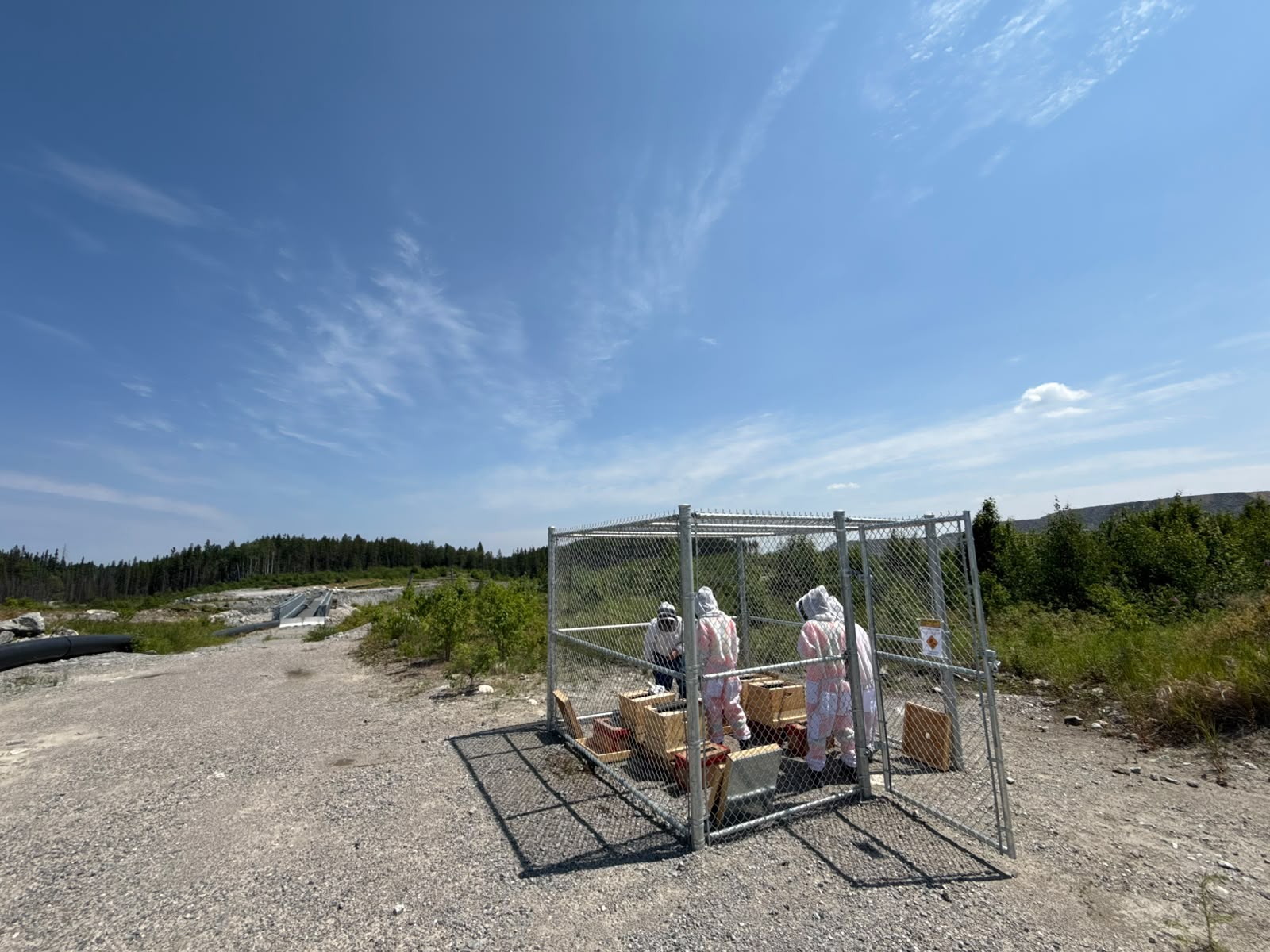
Funded through the IAMGOLD President’s Innovation Fund for Strategic Investment, the two-year project led by Mateus Pepinelli, Assistant Professor in the School of Natural Sciences, is focused on pollinators, biodiversity and ecosystem recovery following mining activities. The research is being carried out in collaboration with Côté Gold’s Environmental Team to set up three apiaries at our mine near Gogama, Ont.
Pollinators and Ecosystem Health
The research looks at plant–pollinator interactions and how these relationships may reflect broader ecosystem conditions. It considers how factors such as climate variability, wildfires and environmental stressors can influence pollinators and their development cycles.
These interactions depend on precise timing. When that timing is disrupted, it can create mismatches between plants and pollinators, reducing successful pollination and affecting ecosystem stability.
“By supporting this research, Côté Gold is exploring whether pollinator activity can be used as an indicator of ecosystem recovery or as an early warning sign of environmental stress. This work will help deepen our understanding of how reclamation efforts support the return of pollinator communities and the ecological interactions that sustain healthy landscapes,” explains Jessica Tratnik, Lead, Environment, Social and Governance at Côté Gold.
A Collaborative Approach to Post-Mining Recovery
Since fall 2025, the research team has been working within a shared biodiversity framework focused on post-mining recovery. The apiaries at Côté Gold follow a similar design to those at Laurentian University, allowing for comparisons between locations and over time.
The project includes the collection of additional environmental data, including eDNA, to support biodiversity monitoring and improve understanding of species interactions within the ecosystem.
“At Côté Gold, restoring landscapes is not only about replanting vegetation. It is also about rebuilding the interactions between plants, pollinators and the surrounding environment that allow ecosystems to function over the long term,” says Genevieve Sulatycky, Manager, Sustainability.
Supporting Research and Learning
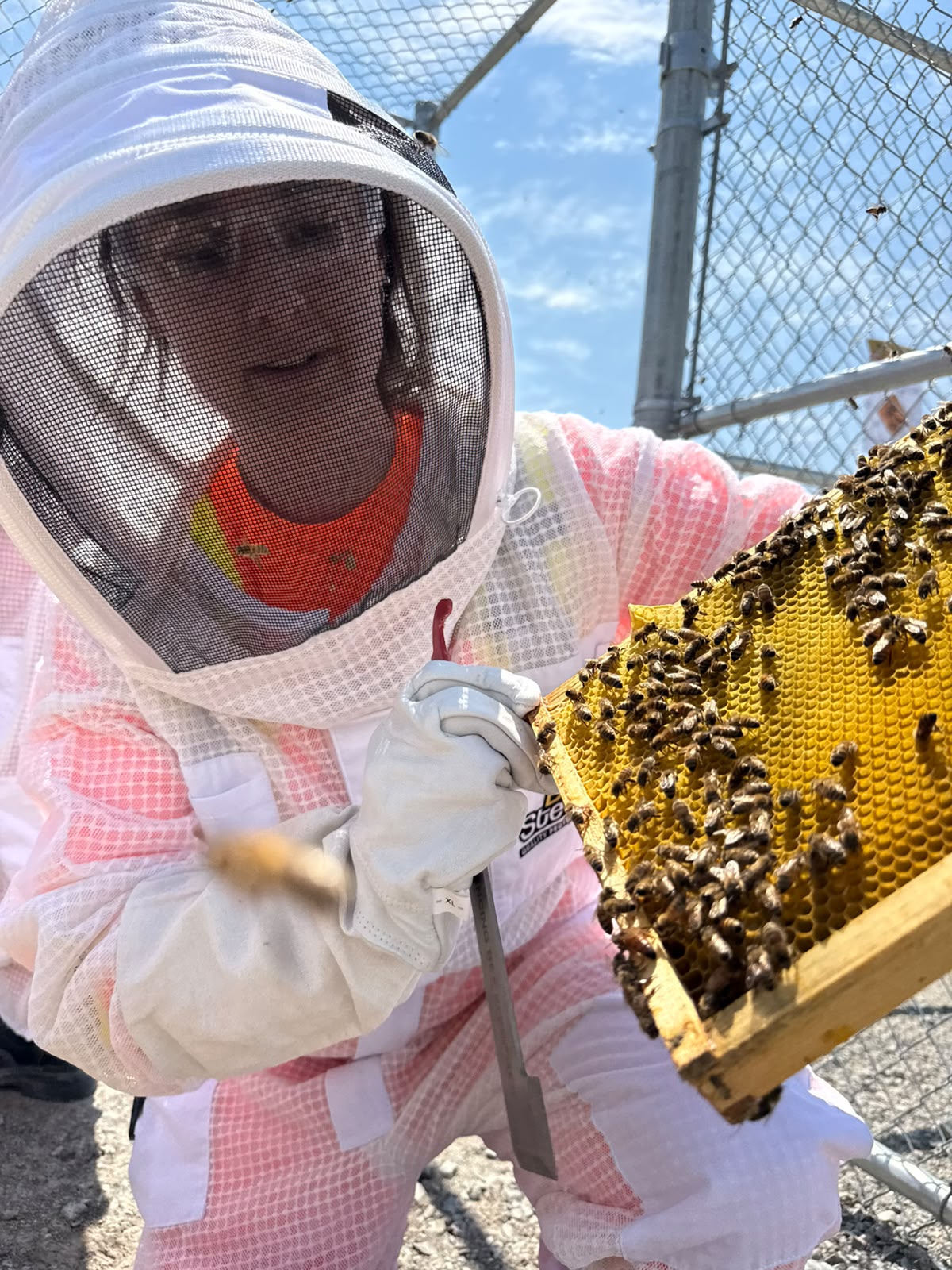
While the project is still in its early stages, it is already helping lay the groundwork for long-term ecosystem monitoring at Côté Gold. It also creates hands-on learning opportunities for the students, who are involved in setting up the apiaries, installing bees and collecting data in the field.
By collaborating with Laurentian University and supporting applied research through the IAMGOLD President’s Innovation Fund for Strategic Investment, IAMGOLD aims to contribute to knowledge that may inform future reclamation and biodiversity monitoring, advancing responsible mining practices in the industry.
Thank you to Mateus Pepinelli, Laurentian University, Jessica Tratnik and Genevieve Sulatycky, as well as everyone involved in the project.